Practice beats talent far more often than parents think. See how Serena Williams trained on public courts, plus 5 ways to help your child build a practice habit that wins.
- Why practice beats talent more often than not
- What the “talented” label does to a child
- 5 ways to help your child see that practice beats talent
Practice beats talent, but you'd never know it from the way we talk to kids. We call one child “a natural” and another “not sporty,” as if ability were fixed at birth. And the danger is quiet but real: a child who believes they're either gifted or hopeless stops doing the one thing that actually decides the outcome — the work.
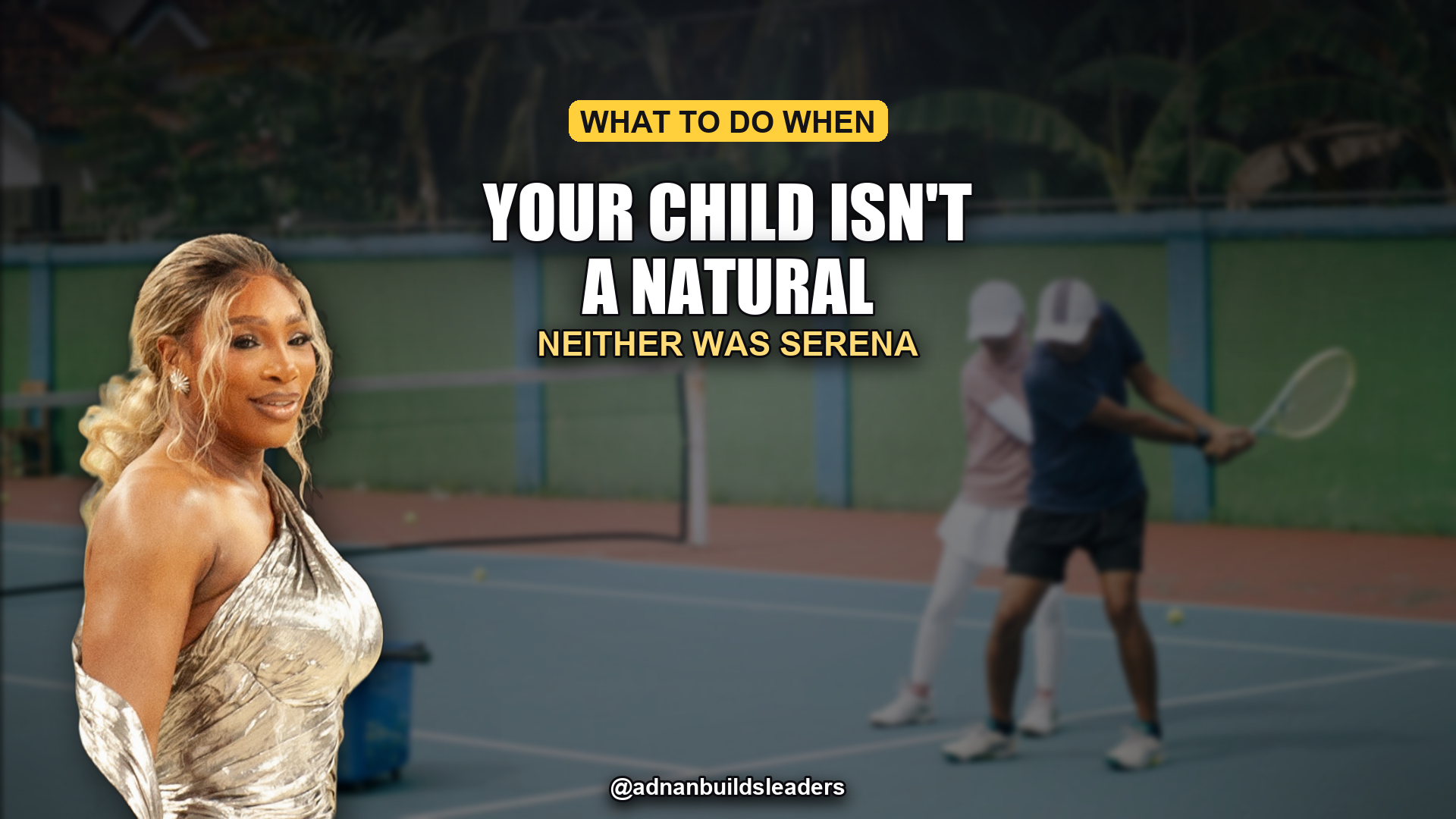
So picture this. Two sisters on cracked public courts in a rough part of town, hitting balls for hours while their father coached from a shopping trolley of second-hand rackets. No fancy academy. No shortcut. Just practice, day after day. One of those girls was Serena Williams, who practised her way to twenty-three Grand Slam titles and a place among the greatest athletes ever.
She wasn't simply born unbeatable. She was built, swing by swing. That's the lesson worth giving your child: not “are you talented?” but “are you willing to practise?” Let's look at why practice beats talent, what gets in the way, and how to build the habit at home — starting today.
Why practice beats talent more often than not
Talent is a nice head start, but it fades fast without work. The child who's “naturally good” often coasts, while the one who practises quietly passes them. Over months and years, the gap isn't about gifts — it's about hours.
Researchers who study expertise say the same thing. Skill is built through focused, repeated practice) — trying, failing, adjusting, and going again. Psychologist Carol Dweck's work on mindset adds the missing piece: children who believe ability can grow through effort actually achieve more than those who think it's fixed. In other words, what your child believes about practice shapes how far they go.
Does practice really beat talent? Most of the time, yes. Talent gives a small head start, but skill is built through focused, repeated practice over time. A child who practises steadily usually overtakes a more “gifted” child who doesn't. Just as important, believing effort works keeps children trying — and trying, repeated, is what turns ability into achievement.
What the “talented” label does to a child
Calling a child talented feels like a compliment. But it can backfire badly, because it ties their identity to looking effortless — and that makes hard work feel like a threat.
- A child praised as “gifted” may avoid harder challenges, afraid to lose the label.
- A child told they're “just not good at it” gives up before practice ever gets a chance.
- When results are praised but effort is ignored, kids stop valuing the grind that builds skill.
- Comparison with “naturals” makes ordinary, necessary practice feel pointless and shameful.
So change what you praise. Notice the reps, the showing-up, the small improvements. When practice is what earns your pride, your child learns to lean into effort instead of hiding from it.
5 ways to help your child see that practice beats talent
This isn't about drilling your child into the ground. It's about making practice small, regular, and rewarding enough that they keep coming back. Here's how to show your child that practice beats talent.
Why does this work? Because every visible improvement is proof. When a child sees their own practice turn into a skill they didn't have last month, they stop waiting to be “naturally good” and start believing effort pays — a belief that powers every hard thing they'll ever attempt.
From steady practice to a child who stands out
Step back and see the bigger win. The point was never the tennis serve or the piano scale. It's the habit of practice itself — the deep, useful knowledge that you can get good at almost anything if you're willing to work at it. That belief is rarer, and more valuable, than any single talent.
Serena didn't just win matches; she modelled what relentless practice makes possible. Teach your child that practice beats talent, and you free them from the trap of “I'm just not good at this.” You're raising someone who can build any skill they decide they want. Our guides on building real confidence in kids and how to lose a step towards winning carry this forward.
The bottom line: practice beats talent
Don't let your child wait around to be a “natural.” Practice beats talent for the patient and the persistent, and the habit of steady effort will outrun raw ability almost every time. Make practice small, praise the work, and let your child watch their own improvement add up.
Want a clear path to raise a driven, confident child? Explore Habbinson's courses on communication, confidence, and leadership for kids — and don't just raise a child, raise a leader.
Frequently Asked Questions
Is it true that practice beats talent?
Most of the time, yes. Talent offers a small head start, but real skill is built through focused, repeated practice. A child who practises steadily usually overtakes a more “gifted” peer who relies on natural ability alone. Believing effort works also keeps children trying, which compounds over time.
Did Serena Williams really train on public courts?
Yes. Serena and her sister Venus trained on public courts in Compton, California, coached by their father with modest equipment and long daily hours. Their rise from those courts to tennis greatness is a vivid example of how relentless practice, not just talent, builds champions.
Why is it bad to call my child “talented”?
Praising talent can tie a child's identity to looking effortless, so hard work starts to feel risky. They may avoid challenges that could expose them as “not gifted.” Praising effort and practice instead keeps them trying when things get tough, which is what actually builds skill.
How do I get my child to practice without fighting?
Keep it small, daily, and rewarding. Ten focused minutes beats an occasional marathon. Praise the effort, track visible progress, and normalise the messy middle where they get worse before better. When practice feels doable and their improvement is visible, resistance drops.
How much practice does a child really need?
Less than you'd fear, if it's consistent. Short, focused, regular practice usually beats long, rare sessions. The key is steadiness — small daily reps that add up — plus enough enjoyment that your child wants to keep going rather than dreading it.
How does a practice habit help my child's future?
The belief that effort builds ability is one of the most powerful gifts a child can have. It frees them from “I'm just not good at this” and lets them learn any skill they choose — in school, work, and life. A practice habit turns talent into achievement again and again.
Want to build your child’s spoken English and confidence? Explore the Spoken English for Kids course at Habbinson — live 1:1 classes that turn shy kids into clear, confident speakers.