Your child's imagination is their superpower. Learn why it matters, what kills it, and 5 simple ways to protect it — plus the Disney story every parent should know.
- Why your child's imagination matters more than grades
- What quietly kills a child's imagination
- 5 simple ways to protect your child's imagination
Your child's imagination can turn a cardboard box into a spaceship in seconds. One minute it's rubbish for the bin; the next, they're blasting past the moon and telling you, with total seriousness, that it follows them home. And somewhere inside you, a tired grown-up voice wants to say, “That's not real.” Resist that voice. This tiny moment matters far more than you think.
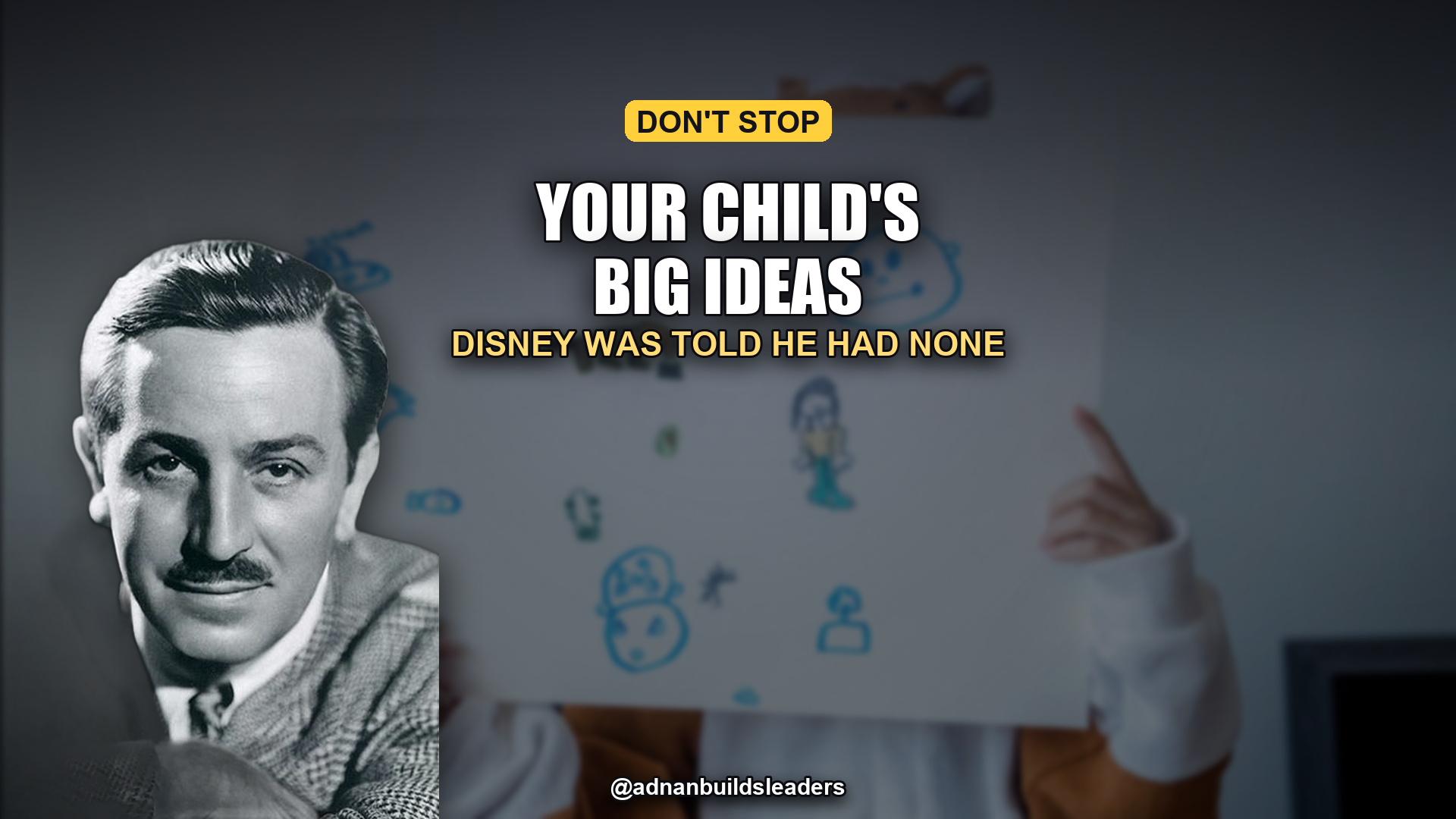
So here's a story worth remembering. A young newspaper editor once fired a budding artist, telling him he lacked imagination and had no original ideas. That artist was Walt Disney. His first animation studio went bankrupt. He was broke and doubted. But he kept drawing the silly little characters in his head — and one of them became Mickey Mouse, and then a whole magic kingdom.
That's not a promise your child will build an empire. But it is a warning: the world will try to talk your child out of their imagination, and your job is to protect it. Let's look at why it matters so much, what quietly kills it, and how to keep it alive — starting today.
Why your child's imagination matters more than grades
It's easy to treat imagination as cute but useless — something kids should grow out of. The opposite is true. When your child invents a game, argues with a stuffed animal, or builds a world out of blocks, they're not wasting time. They're doing the most serious work of childhood.
Pediatricians agree. The American Academy of Pediatrics calls play essential to healthy development — it's how children learn to solve problems, manage feelings, and get along with others. Their landmark report even urges doctors to “prescribe play” because pretend and open-ended play build the brain's thinking and self-control circuits. In other words, the spaceship made of cardboard is brain-building, not babble.
Why does your child's imagination matter? Imagination is how children practise thinking, problem-solving, and handling emotions before they ever face the real thing. Through pretend play a child tests ideas, invents solutions, and builds confidence and language. Far from a distraction, it's one of the strongest foundations for learning, creativity, and communication later in life.
What quietly kills a child's imagination
Nobody sets out to crush their kid's creativity. It happens in small, well-meaning moments. We correct the “wrong” colour of the sky. A screen gets handed over instead of a boring afternoon. Every hour fills up with classes, leaving no empty space for daydreaming.
- Saying “that's not real” or “that's silly” when a child shares a wild idea.
- Over-scheduling, so there's never an empty, bored afternoon for invention.
- Too much screen time, which feeds a child stories instead of letting them build their own.
- Praising only neat, “correct” results instead of bold, original tries.
Boredom feels like a problem to fix. But a bored child is a child about to invent something. The empty afternoon is where imagination grows — so don't rush to fill every gap with entertainment.
5 simple ways to protect your child's imagination
You don't need expensive toys or a craft cupboard. You mostly need to get out of the way and add a little fuel. Here's how to protect your child's imagination in everyday moments.
Why do these small habits work? Because imagination grows from freedom and safety, not instruction. Harvard's Center on the Developing Child notes that the “serve and return” back-and-forth between a child and a caring adult is what strengthens young minds. When you take their ideas seriously, you're not just being kind — you're literally helping build the architecture of their brain.
From imagination to a child who stands out
Step back and see the bigger picture. The cardboard spaceship isn't the point. The point is a child who can look at a blank, boring situation and see a possibility no one else sees. That's exactly what makes an inventor, a founder, a leader — and a great communicator who can paint a picture in other people's minds.
Disney didn't just doodle a mouse. He learned to sell a dream so vividly that millions wanted to live in it. Your child's imagination is the seed of that same power. Guard it now, and you're raising someone who creates instead of just copies. Our guides on helping children learn naturally and building real confidence in kids carry this forward.
The bottom line on your child's imagination
Don't let the world talk your child out of their best ideas. Your child's imagination is brain-building, future-shaping work disguised as play. Protect the boredom, take the wild ideas seriously, and play along — and you'll raise a creator, not a copier.
Want a clear path to raise a confident, creative communicator? Explore Habbinson's courses on communication, confidence, and leadership for kids — and don't just raise a child, raise a leader.
Frequently Asked Questions
Why is my child's imagination so important?
Imagination is how children practise real-life thinking in a safe space. Through pretend play they solve problems, handle big feelings, build language, and grow confidence. Pediatricians link rich play to stronger brains and better self-control, so it's a foundation for learning — not a distraction from it.
How can I encourage my child's imagination at home?
Keep it simple. Offer open-ended things like boxes and blocks, protect screen-free boredom, play along with their make-believe, and respond to wild ideas with “tell me more” instead of “that's not real.” These small, daily habits give imagination room to grow.
Did Walt Disney really get fired for lacking imagination?
Yes. Early in his career a newspaper editor reportedly let Disney go, saying he lacked imagination and original ideas. His first studio also went bankrupt. He kept creating anyway and went on to build one of the most imaginative companies in history — a reminder not to write off a creative child.
Is too much screen time bad for a child's imagination?
Screens aren't all bad, but heavy passive watching feeds children ready-made stories instead of letting them build their own. Trading some screen time for open-ended, screen-free play gives your child the empty space where imagination and invention actually happen.
My child has a huge imagination — should I worry?
A big imagination is a gift, not a problem. Vivid pretend play, imaginary friends, and wild stories are healthy signs of a developing mind. Your job isn't to rein it in but to protect it, while gently helping them tell the difference between pretend and real.
How does imagination help my child's future?
The ability to imagine — to see what isn't there yet — sits behind creativity, problem-solving, entrepreneurship, and great communication. A child who can dream up ideas and explain them vividly is set up to stand out in school, work, and life.
Want to build your child’s spoken English and confidence? Explore the Spoken English for Kids course at Habbinson — live 1:1 classes that turn shy kids into clear, confident speakers.