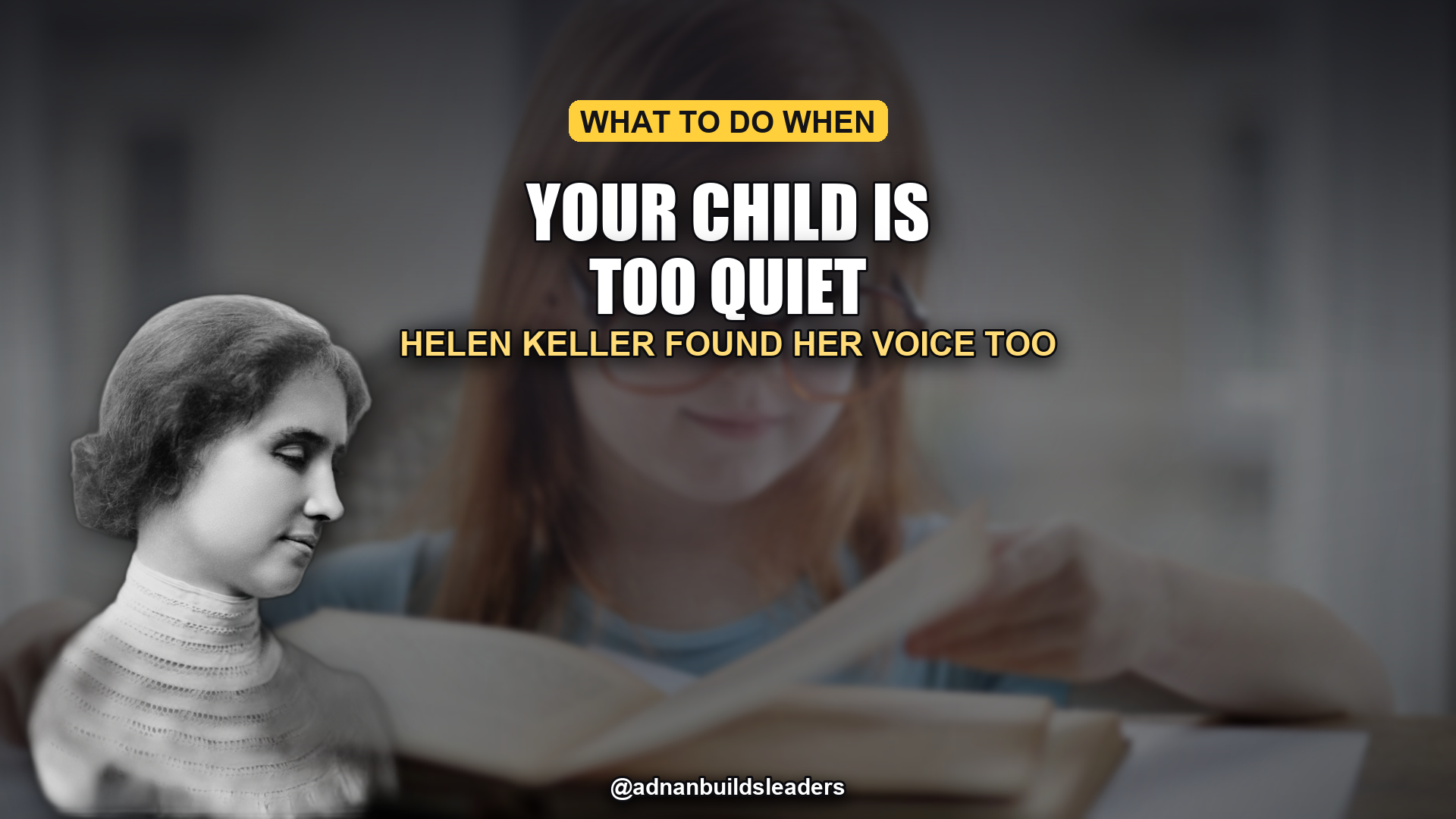
Want to help your child find their voice? See how Helen Keller learned to communicate against all odds, plus 5 gentle ways to help a quiet child speak up with confidence.
- Why some children struggle to find their voice
- What quietly keeps a child silent
- 5 gentle ways to help your child find their voice
Some children find their voice easily, chattering from the moment they wake. Others hold back — the quiet one at the party, the child who shrugs instead of answering, the kid who has so much inside but lets it stay there. If that's your child, you may worry they'll be overlooked, talked over, or left behind. That worry is love, and it's worth acting on.
So hold on to this story. A baby girl lost both her sight and her hearing before she was two. Locked in silence and darkness, she had no words at all — until a patient teacher spelled them, letter by letter, into her palm. At a water pump, it finally clicked. That girl was Helen Keller, and she went on to find her voice so fully that she wrote books and moved nations.
If a child with none of the usual tools could learn to communicate, your quiet child can absolutely learn to speak up. The point isn't volume — it's giving every child a way to be heard. Let's look at why some kids hold back, and how you can gently help them find their voice, starting today.
Why some children struggle to find their voice
A quiet child is rarely a child with nothing to say. More often, the words get stuck somewhere between the thought and the mouth. Sometimes it's temperament — a careful, watchful nature. Sometimes it's nerves, or simply not having had enough patient, unhurried space to practise.
And it matters, because communication is learned, not fixed. Speech experts at ASHA describe how children's expressive skills grow step by step through everyday back-and-forth talk. Harvard researchers call this the serve and return of conversation — and it's exactly how a child slowly builds the confidence to put their thoughts into words and share them out loud.
How do I help my child find their voice? Give them unhurried, judgement-free chances to talk every day. Ask open questions, then wait in silence so they can fill it. Listen fully when they do speak, and never rush, mock, or finish their sentences. Small, patient, daily practice — not pressure — is how a quiet child learns to express themselves with confidence.
What quietly keeps a child silent
We never mean to hush our kids. But in busy homes, small habits can teach a child that speaking up isn't worth it — that it's faster to stay quiet and let someone else fill the gap.
- Answering for them when someone asks a question, so they never get the turn.
- Rushing or finishing their sentences because we're in a hurry.
- Correcting or laughing at how they say something, so they stop trying.
- Filling every silence ourselves, leaving no space for them to step in.
So slow down and leave the door open. A child finds their voice in the gaps we're brave enough to leave — the pause after a question, the quiet we don't rush to fill. Your patience is the invitation.
5 gentle ways to help your child find their voice
You won't get there by pushing a shy child onto a stage. You get there by making everyday talking feel safe, easy, and worth it. Here's how to help your child find their voice without pressure.
Why do these small moves work? Because confidence grows from being heard. Each time your child speaks and someone truly listens, their brain learns that their voice has power. Repeat that enough, and the quiet child starts raising their hand, sharing the idea, telling you about their day without being asked.
From a quiet child to one who stands out
Step back and see what's really at stake. The goal was never to make your child loud. It's to make sure the world gets to hear what they think — that a great idea in their head doesn't die in silence. The ability to speak up is what turns a smart child into a leader people listen to.
Helen Keller didn't just learn words; she used them to change minds across the world. Your child's voice is waiting for the same patient encouragement. Help them find their voice now, and you're raising someone who can stand in any room and be heard. Our guides on when your child has a lot to say and building real confidence in kids take this further.
The bottom line: help your child find their voice
Don't let a quiet nature hide a bright mind. Every child can find their voice with patience, real listening, and the courage to leave a few silences open. Give them the turn, hear them fully, and watch a held-back child slowly start to speak up.
Want a clear path to raise a confident communicator? Explore Habbinson's courses on communication, confidence, and leadership for kids — and don't just raise a child, raise a leader.
Frequently Asked Questions
How can I help my shy child find their voice?
Make talking feel safe and unhurried. Ask open questions and wait in silence, listen fully when they speak, offer simple choices, and let them handle small real moments like ordering food. Avoid speaking for them. Patient daily practice, not pressure, helps a quiet child express themselves.
Why won't my child speak up even though they're bright?
A quiet child usually has plenty to say — the words just get stuck between the thought and the mouth. It can be temperament, nerves, or simply not enough unhurried practice. Bright children often hold back because they're careful, not because they lack ability or ideas.
How did Helen Keller learn to communicate?
Helen Keller lost her sight and hearing as a baby. Her teacher, Anne Sullivan, spelled words into her hand again and again until, at a water pump, Helen connected the finger-spelling to the thing itself. She went on to read, write, and speak — and became a world-famous author and activist.
Is it bad to answer questions for my child?
Answering for your child, with good intentions, can quietly teach them that they don't need to speak. Each missed turn is a missed chance to practise. Bite your tongue, leave the silence, and let them answer even if it's slow — those turns are how they find their voice.
At what age should I worry about a quiet child?
Many children are simply quiet by nature and develop fine. Watch the communication milestones and your child's understanding and connection rather than only their talkativeness. If they're losing skills, not understanding you, or deeply distressed by speaking, check with your doctor.
How does finding their voice help my child's future?
Being able to share ideas clearly is one of the highest-value skills in school, work, and life. A child who can speak up gets their thinking heard, builds confidence, and grows into a leader people listen to. Helping them find their voice early sets up a lifetime of being understood.
Want to build your child’s spoken English and confidence? Explore the Spoken English for Kids course at Habbinson — live 1:1 classes that turn shy kids into clear, confident speakers.