Every child learns differently — and school doesn't always see it. Learn why “slow” labels are so often wrong, and 5 ways to teach to your child's real strengths.
- Why “every child learns differently” is more than a nice saying
- The hidden cost of the “slow” label
- 5 ways to teach a child who learns differently
Every child learns differently, but a report card rarely says so. It says “below average,” or “not trying,” or “slow.” And if you've ever sat at a parent meeting with your stomach in a knot, hearing your bright, funny kid described as a problem, you know how much those words can sting — and how wrong they can be.
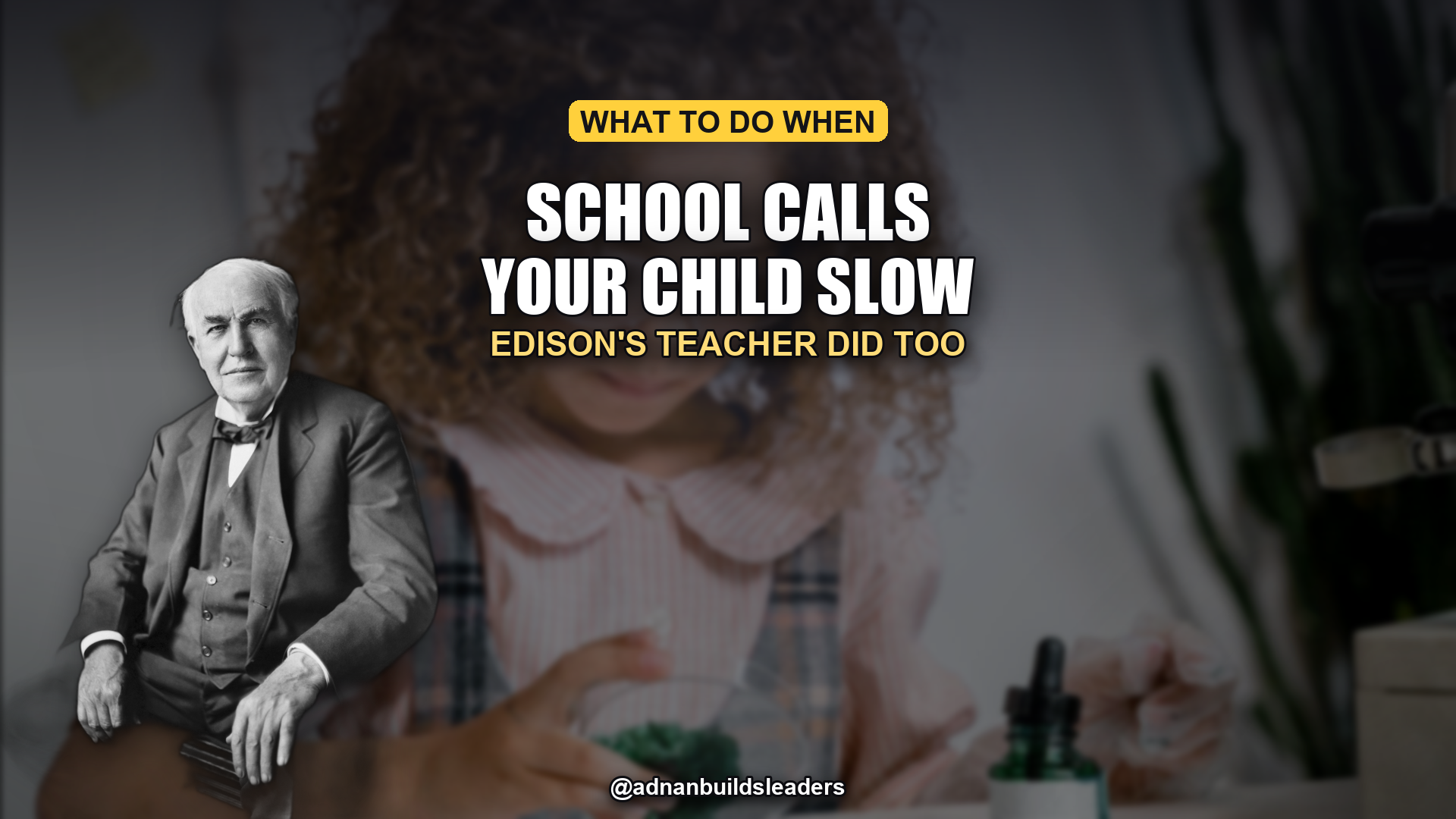
So here's a story to keep in your back pocket. A boy was sent home from school after just a few months. His teacher called him “addled” — confused, slow, not worth the trouble. His mother was furious. She pulled him out and taught him herself, following what actually lit him up. That boy was Thomas Edison, who grew up to hold over a thousand patents and light up the world.
That's not a promise your child is a hidden genius. But it is proof that a classroom's verdict is not your child's ceiling. Let's look at why these labels miss the mark, what they cost, and how to teach to the way your child is actually wired — starting now.
Why “every child learns differently” is more than a nice saying
It's tempting to hear “every child learns differently” as a feel-good line for assembly halls. But it's simply how brains work. Children develop on their own timelines, with different strengths in language, movement, numbers, music, and people. A six-year-old who can't sit still might be building skills the worksheet never measures.
This is why one-size-fits-all judgements fail so often. Organisations like Understood, which supports kids who learn and think differently, stress that a struggle in one area says nothing about a child's overall intelligence or potential. Harvard's Center on the Developing Child makes a similar point: brains are built over time, shaped by experience — not fixed at the first test.
What does “every child learns differently” mean? It means children take in, process, and show what they know in different ways and on different timelines. One child reads early; another talks late but builds beautifully. A struggle in one school subject doesn't define a child's intelligence. The job of a parent is to find and feed each child's real strengths, not force them all through one mould.
The hidden cost of the “slow” label
Labels are sticky. When a child hears “you're just not good at this,” they often stop trying — not because they can't, but because they believe they can't. Psychologists call it a fixed mindset, and it can do more damage than the original struggle ever would.
- A child who's told they're “slow” starts to avoid the very subjects they could grow in.
- One bad fit with a teacher or method gets mistaken for a permanent lack of ability.
- Real strengths — creativity, curiosity, hands-on skill — go unnoticed because they're not on the test.
- Confidence drops, and a discouraged child learns far slower than a curious one.
So before you accept a label, ask a better question. Not “what's wrong with my child?” but “how does my child learn best, and is school matching it?” That single shift changes everything that comes next.
5 ways to teach a child who learns differently
You don't need to become a teacher or buy a program. You need to watch your child closely and adjust — because every child learns differently, and you are the expert on yours.
Why does this work? Because motivation is fuel. When a child feels capable, they take on harder things, and effort itself starts to feel good. That's exactly how Edison's mother turned a “hopeless” pupil into the most relentless learner of his age — she met him where he was and let his curiosity run.
From a different learner to a child who stands out
Pull back and look at the long game. The goal was never to make your child average at everything. It's to help them find the one or two things they're brilliant at — and become unmistakably good at them. The world doesn't reward the well-rounded who blend in; it rewards the people who stand out for something.
Edison didn't win by fitting the classroom. He won by being relentlessly, differently himself. Your child's “weakness” at school may be the flip side of a real gift. Find it, feed it, and you're raising someone with an edge. Our guides on helping children learn naturally and building real confidence in kids show you how.
The bottom line: every child learns differently
Don't hand a label the power to write your child's story. Every child learns differently, and a “slow” verdict usually means the method missed the child — not that the child fell short. Watch how yours learns, feed their strengths, and guard their confidence fiercely.
Want a clear path to raise a confident, capable learner? Explore Habbinson's courses on communication, confidence, and leadership for kids — and don't just raise a child, raise a leader.
Frequently Asked Questions
What does it mean that every child learns differently?
It means children absorb and show knowledge in different ways and on different timelines. One reads early, another is hands-on, another talks things through. A struggle in one subject doesn't measure a child's intelligence. The parent's job is to find each child's strengths and teach through them.
My child was called “slow” at school — should I worry?
One classroom verdict is not your child's ceiling. A poor fit with a method or teacher is often mistaken for a lack of ability. Look at how your child learns best, feed their strengths, and get a proper assessment if you're concerned — but don't let a single label define them.
Was Thomas Edison really a poor student?
Yes. By many accounts Edison was sent home early in his schooling, with a teacher calling him “addled.” His mother taught him at home, following his curiosity. He went on to become one of history's most prolific inventors — a powerful reminder that early labels are often wrong.
How do I find out how my child learns best?
Watch what pulls them in. Notice whether they learn by doing, talking, drawing, or moving, and which subjects they lose track of time in. Then offer new material in that channel. Since every child learns differently, close observation tells you more than any generic test.
How can I help a child who learns differently keep their confidence?
Protect their belief that they can grow. Break tasks into small wins, praise effort over results, stop comparisons with other kids, and never repeat a “slow” label at home. A confident child takes on hard things; a discouraged one gives up before trying.
Does learning differently mean my child has a learning disability?
Not necessarily. Many children simply develop at their own pace or have a different mix of strengths. Some do have specific learning differences that benefit from support. If you see a persistent, significant gap, ask a professional — but learning differently is normal, not a diagnosis.
Want to build your child’s spoken English and confidence? Explore the Spoken English for Kids course at Habbinson — live 1:1 classes that turn shy kids into clear, confident speakers.