Is your child a late bloomer? Don't write them off. See how an average student named Stephen Hawking changed science, plus 5 ways to back a child who's blooming slowly.
- Why a late bloomer is so often misjudged
- The damage of writing a child off early
- 5 ways to help your late bloomer
A late bloomer can break a parent's heart for no good reason. You watch other kids read first, score higher, win the prizes — while yours seems to dawdle a few steps behind. The school hints they're “average.” And a cold little fear creeps in: what if this is just who they are? Pause there, because that fear is almost always wrong.
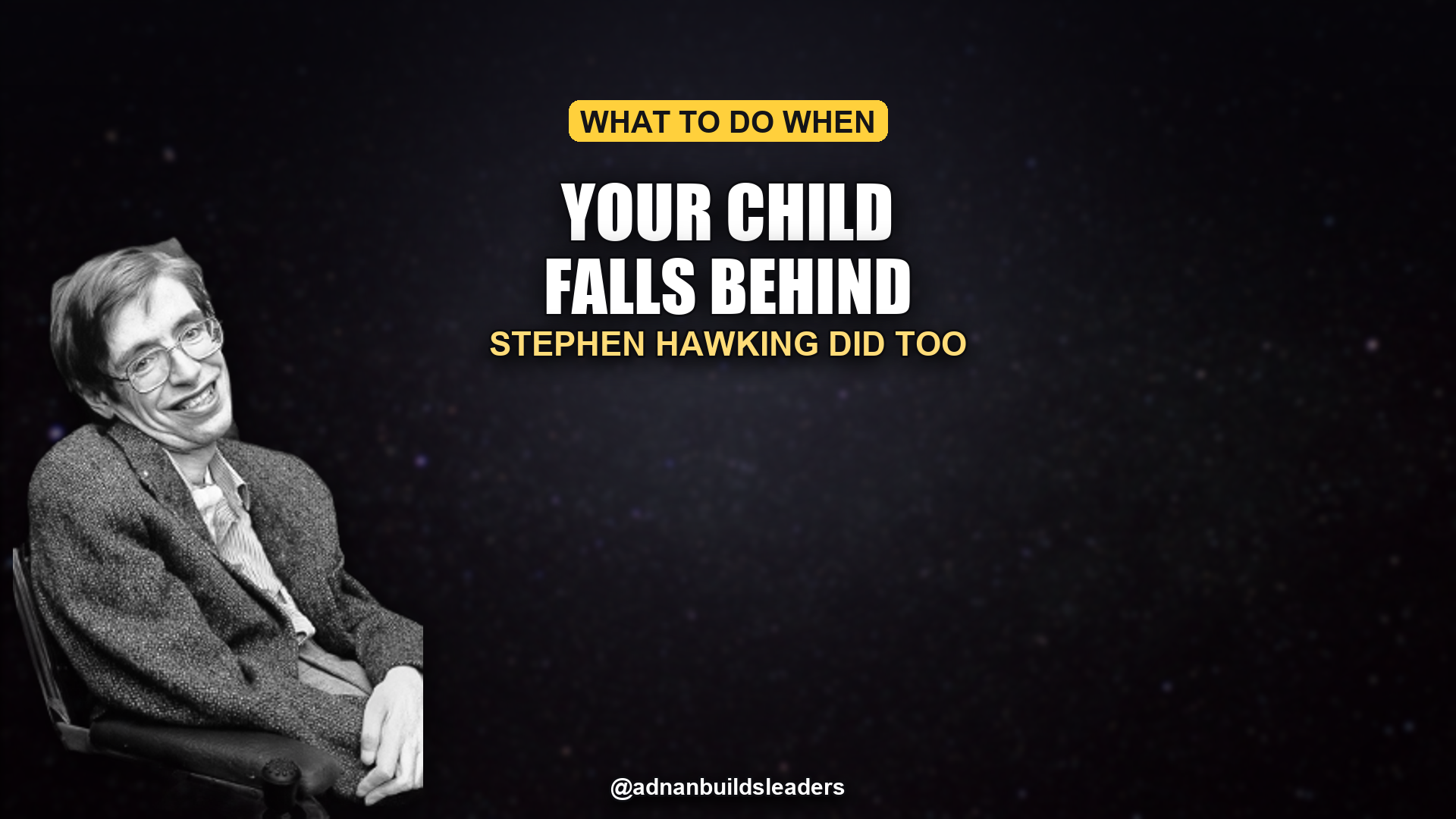
So remember this boy. At school he was unremarkable — a slow reader, an ordinary student, never top of his class. Classmates even nicknamed him after a famous scientist as a half-joke, because he seemed so unlikely to amount to much. That ordinary boy was Stephen Hawking, who went on to reshape how humanity understands black holes and the universe itself.
He didn't peak at ten. He bloomed later, when his real gift finally found its subject. That's the quiet truth about a late bloomer: slow early is not the same as limited. Let's look at why kids develop on wildly different timelines, and how to help yours instead of writing them off — starting today.
Why a late bloomer is so often misjudged
Schools measure a narrow band of skills on a fixed timeline, and they measure it all at once. So a child whose strengths arrive a little later, or sit outside the test, gets quietly sorted into “behind.” But development isn't a single race with one finish line.
The science is reassuring here. Harvard's Center on the Developing Child explains that the brain is built over time, with different abilities coming online at different ages — and experience keeps shaping it for years. Add Carol Dweck's research on mindset, which shows that children who believe they can grow keep improving long after the “gifted” ones have coasted. A slow start, in other words, says very little about the finish.
What is a late bloomer? A late bloomer is a child whose talents and confidence emerge later than their peers'. They may seem average or behind early on, then surge once their strengths find the right subject, teacher, or moment. Children develop on very different timelines, so an early lag rarely predicts a child's true ability or future.
The damage of writing a child off early
The biggest risk to a late bloomer isn't the slow start. It's the label that gets stuck on during it — because children tend to become the story the adults around them keep telling.
- A child who hears “you're behind” often stops trying, fulfilling the very prediction.
- Constant comparison with faster peers teaches shame instead of patience.
- Real, slower-blooming strengths get ignored because everyone's watching the wrong scoreboard.
- Pressure to “catch up” now can kill the curiosity that would have carried them later.
So guard your child's belief in themselves like it's precious — because it is. The job isn't to rush their bloom. It's to keep the soil warm so that when their season comes, they're still standing, still curious, still in the game.
5 ways to help your late bloomer
You can't force a flower open, and you can't force a child to bloom on schedule. What you can do is protect their confidence and feed their curiosity until their moment arrives. Here's how to support a late bloomer.
Why does this matter so much? Because a child who keeps their confidence keeps trying, and a child who keeps trying eventually blooms. Each time you protect their belief instead of feeding their fear, you buy them the time their own development needs to do its work.
From late bloomer to a child who stands out
Step back and see the long game. The goal was never to win the race at age eight. It's to make sure your child is still confident and curious at eighteen, when the things that truly matter — depth, drive, originality — finally get their say. Plenty of early stars burn out; plenty of late bloomers quietly take the lead.
Hawking didn't dazzle the classroom; he changed the world once his gift found its subject. Refuse to write off your late bloomer, and you give them the one thing a slow start can't: the time and confidence to become who they're meant to be. Our guides on building real confidence in kids and helping children learn naturally show you how.
The bottom line on the late bloomer
Don't let an early lag write your child's whole story. A late bloomer just runs on a different clock, and slow at eight says almost nothing about strong at eighteen. Drop the comparisons, feed the spark, and protect their confidence until their season comes.
Want a clear path to raise a confident, capable child? Explore Habbinson's courses on communication, confidence, and leadership for kids — and don't just raise a child, raise a leader.
Frequently Asked Questions
What is a late bloomer in a child?
A late bloomer is a child whose abilities and confidence appear later than their peers'. They may look average or behind at first, then surge when their strengths meet the right subject or moment. Because children develop on very different timelines, an early lag rarely reflects their real potential.
Was Stephen Hawking really an average student?
Yes. By many accounts Hawking was an ordinary, even slow, student early on and didn't stand out academically as a young boy. He flourished later, especially at university, and went on to become one of the most influential physicists in history — a classic example of a late bloomer.
Should I worry if my child is behind their classmates?
Not on its own. Schools measure a narrow set of skills on a fixed timeline, so children with later-arriving or different strengths can look “behind.” Watch your child's curiosity, understanding, and confidence, support their pace, and seek an assessment only if you see a persistent, significant gap.
Do late bloomers actually catch up?
Many do, and some go far beyond their early-blooming peers. The key is protecting their confidence and curiosity during the slow stretch so they keep trying. A child who keeps believing they can grow keeps improving, and often blooms strongly once their strengths find the right outlet.
How do I support a late bloomer without pressure?
Stop comparisons, find and feed the spark that excites them, praise growth over rank, and give understanding time to settle. Tell stories of people who started slow and finished strong. The aim is to keep them confident and curious until their own season arrives.
How does backing a late bloomer help their future?
It buys them time to become who they really are. Many of the qualities that matter most later — depth, drive, originality — show up after childhood test scores. A child who reaches their teens still confident and curious is set up to surge exactly when it counts.
Want to build your child’s spoken English and confidence? Explore the Spoken English for Kids course at Habbinson — live 1:1 classes that turn shy kids into clear, confident speakers.