

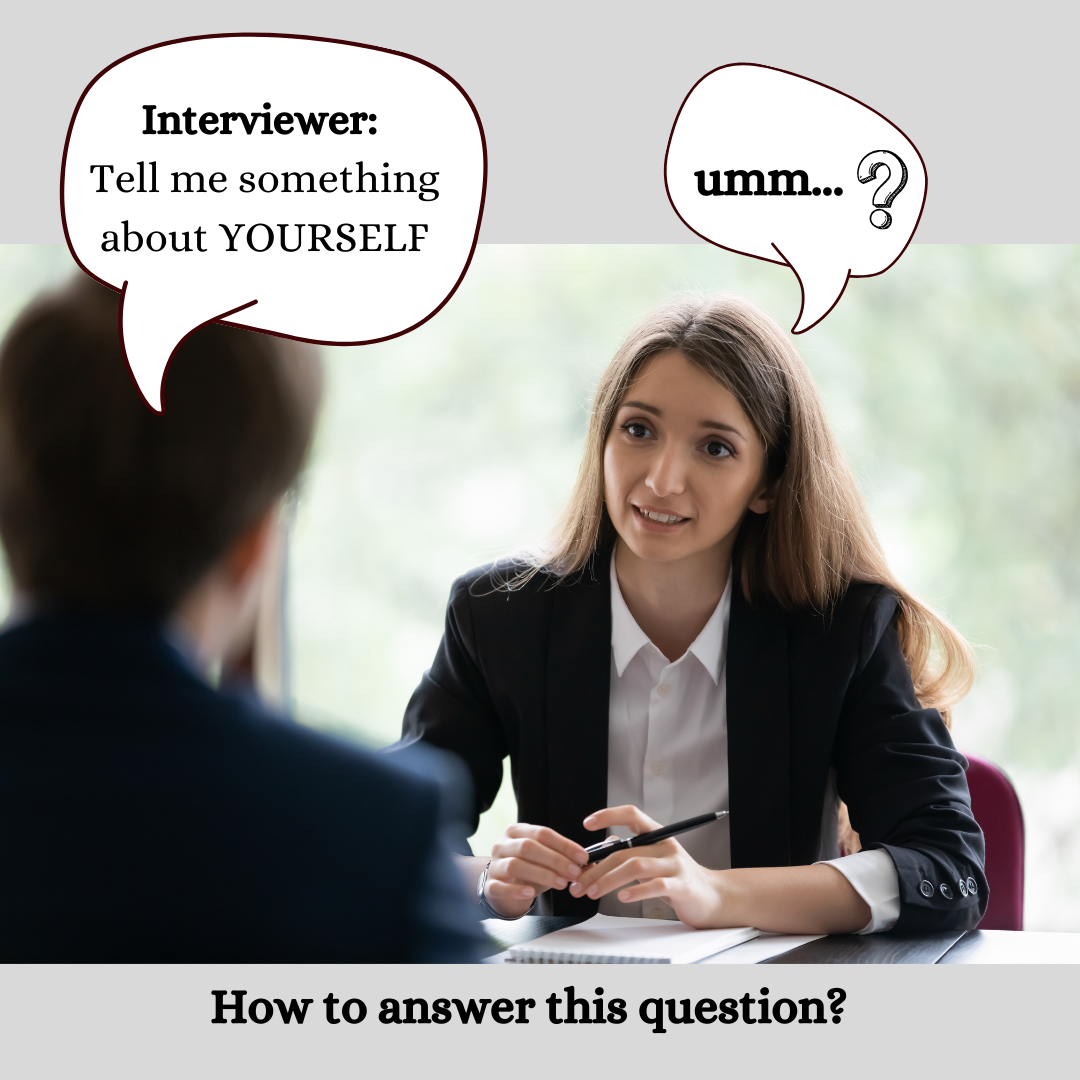
How to Tackle “Tell Me Something About Yourself” in an Interview
“So… tell me something about yourself.”
If you’ve been to a job interview, you know this is how many of them kick off. And for some reason, even though we know it’s coming, this simple question has the power to make people freeze, fumble, or blurt out something they’ve practiced in the mirror 30 times — but still sounds flat in the moment.
Here’s the thing: this question isn’t just polite chit-chat. It’s your opening pitch. The tone you set here can carry through the rest of the conversation.
The most common response? “I’m XYZ, I’m from this city, I graduated from ABC College with a degree in…”
That’s not wrong — but it’s bland. The panel has probably heard it so many times that it blends into the background noise of the day. If you want to stand out, you need an answer that feels like you — real, relevant, and memorable.
Here’s a simple way to get there.
1. Ditch the Resume Recap
They’ve already read your CV. This is your chance to add colour and personality to the black-and-white text they’ve seen. Start with something that shows what drives you, not just what you’ve done.
Example:
“I’ve always been curious about how things work — not in a ‘born engineer’ way, but in the kind of way where I’d open up the TV remote just to see what’s inside… and then spend hours figuring out how to put it back together. That curiosity stuck, and over time, it shaped my path toward engineering.”
See the difference? It’s visual, it’s human, and it tells them more than your degree ever could.
2. Share a Short Story
Instead of rattling off a skill list, tell a quick story that shows those skills in action.
Example:
“In my final year, I worked on a small project — a low-cost tracking system for local shopkeepers. It started as a simple assignment, but two businesses actually ended up using it. Seeing something I built solve a real problem was a big moment for me.”
This shows problem-solving, initiative, and real-world impact — without sounding like you’re giving a TED Talk.
3. Connect It to the Role
Remember, the interviewer’s internal question is always: “So, why should we care?” This is your moment to make the link.
Example:
“That project taught me how to design with the end-user in mind and adapt quickly when challenges pop up — which I know will be valuable for this role.”
Now you’ve moved from “interesting person” to “potentially great hire.”
4. Practice Without Sounding Scripted
Here’s where a lot of people trip — they either wing it (and ramble) or memorise it (and sound robotic). The sweet spot is somewhere in between. Practise your answer enough so you know the beats, but keep the delivery relaxed.
This is something we work on a lot in the Interview Training Program. We help candidates take their raw stories and polish them just enough so they’re confident but still sound like themselves. It’s amazing how much stronger an answer becomes with a few small tweaks.
5. Keep It Short
A good answer is like a movie trailer — it makes them want to see more. Aim for about 60–90 seconds. That’s enough time to tell your story without making it feel like a monologue.
Final Thought
“Tell me something about yourself” isn’t a warm-up. It’s a chance to set the mood for the whole interview and make sure they remember you when the day’s over.
If you want to nail it:
- Lead with personality, not just your bio
- Share a short, relevant story
- Show how it connects to the job
- Practise until it’s smooth but natural
Get this right, and you’ve already taken a big step towards winning that offer.
What “tell me something about yourself” really asks
It isn’t an invitation to recite your life story. The interviewer wants a short, relevant summary of who you are professionally and why you fit this role.
A rambling or overly personal answer wastes the goodwill of the first minute. A crisp, structured one buys you momentum for everything that follows.
A simple framework to answer “tell me something about yourself”
Use present–past–future: what you do now, the experience that led here, and what you’re excited to do next — tied to this job. Keep it to 60–90 seconds.
End on why this role, at this company, fits that arc. That turns a generic intro into a reason to keep talking to you.
Tell me something about yourself: frequently asked questions
How long should the answer be?
About 60–90 seconds. Long enough to show structure, short enough to leave them wanting the detail.
Should I mention hobbies?
Briefly, if they’re relevant or memorable. Lead with the professional story; let one human touch round it off.
Can I memorise it word for word?
Know the structure, not a script. Memorised answers sound flat and crack under follow-ups.
Tell me something about yourself: the bottom line
“Tell me something about yourself” rewards a tight present–past–future story aimed straight at the role. Explore our communication and leadership courses to take the next step. For evidence-based depth, see this resource.