
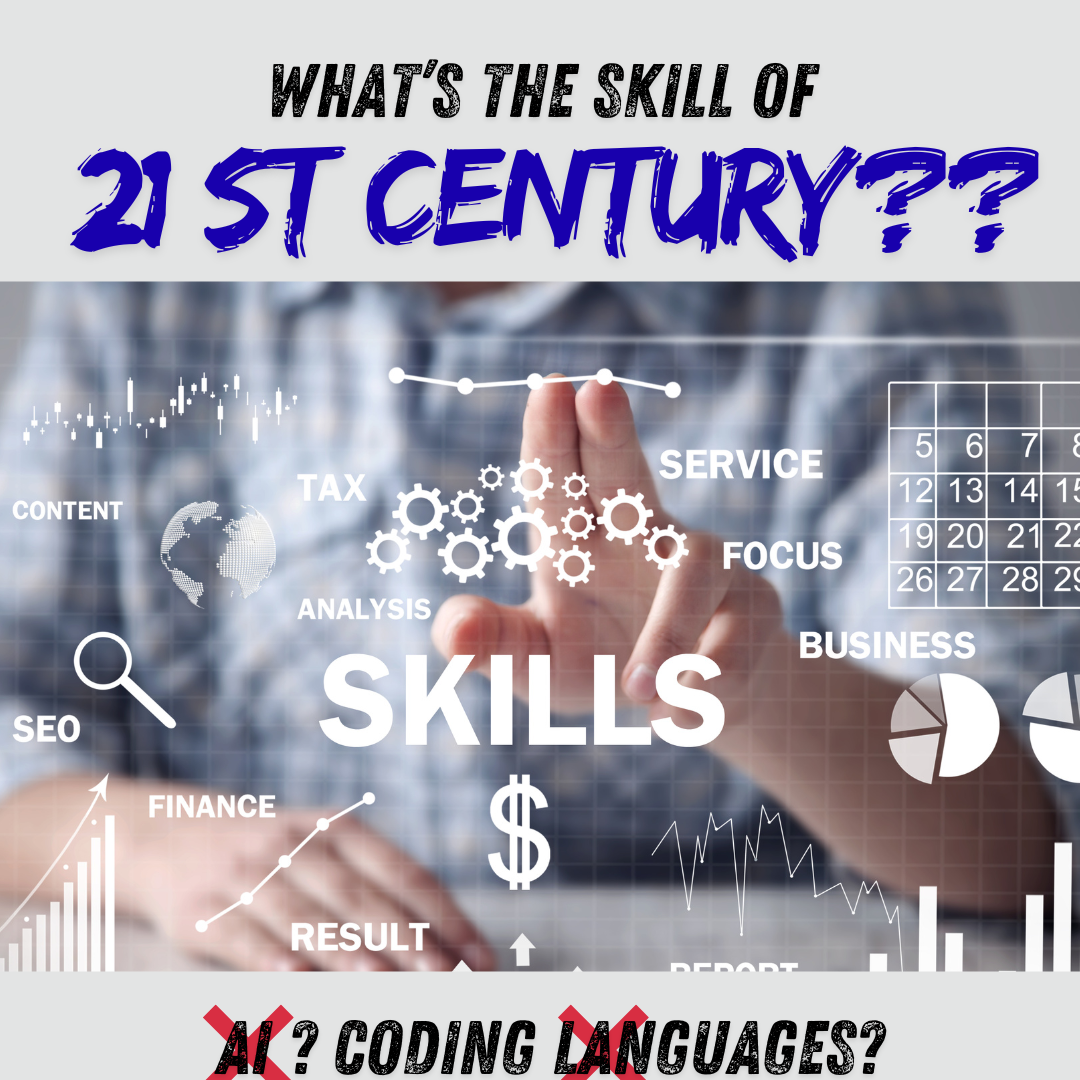
Ask what the most important skill of the 21st century is, and the honest answer surprises most people.
If you walk through any campus hallway today, you’ll hear students discussing Python, machine learning, full-stack development, finance certifications, research tools, or the latest AI trend. Everyone’s building something—and it’s exciting to see.
These technical skills are important. No denying that.
But ask yourself this:
What happens when you know your subject well—but can’t communicate it clearly?
Or when you understand the logic—but hesitate to present it in front of a team?
That’s where many students begin to feel stuck, not because they lack knowledge, but because they haven’t yet worked on how to express it. And this is where personality development quietly becomes the real skill of the 21st century.
The Gap No One Talks About
Let’s take a real scenario. Two students apply for the same internship. Both are equally qualified on paper. One walks in, explains their past project confidently, keeps eye contact, listens well, and answers with clarity. The other has the same knowledge—but fumbles with words, avoids eye contact, and ends their sentences with uncertainty.
Who do you think leaves a stronger impression?
This isn’t about being an extrovert or knowing fancy vocabulary. It’s about self-awareness. It’s about communicating thoughts clearly, using body language that supports your message, and staying composed under pressure.
That’s personality development. And it doesn’t come from motivational talks—it’s built through consistent effort.
Skills That Go Beyond Any One Career
Whether you’re studying engineering, pharmacy, business, or design, your ability to express ideas, hold conversations, collaborate, and lead discussions will travel with you into every role and every opportunity.
-
Learning how to structure your thoughts? That’s where something like our Verbal Communication Course helps—not with scripts, but with real practice.
-
Noticing how your body posture, hand movement, or even eye contact affects a conversation? That’s a key takeaway from our Non-Verbal Communication Course.
-
And if you’ve ever felt anxious before an interview, not because of what you know but because of how to start—it’s exactly the gap we address in our Interview Skills Training Program.
These skills won’t expire with a tech trend. They’re relevant whether you’re in a virtual meeting or an offline room full of decision-makers.
Why This Matters Now More Than Ever
We live in a time where students are exposed to tools their seniors never even imagined. But having access to tools doesn’t automatically mean you’ll be heard, respected, or trusted.
The difference between being technically sound and being professionally ready is communication.
That’s why, at Habbinson, our core belief has remained simple:
“Build skills that actually matter.”
And personality development, through both verbal and non-verbal growth is one of them.
If you’re already learning the tools and technologies of your domain, that’s great. But also make time to build the one skill that will help you speak, lead, present, connect, and grow across every role you take on.
Because the future doesn’t just belong to those who know.
It belongs to those who know how to express it well.
Why communication is the skill of the 21st century
Specific tools age fast; the ability to learn, adapt and communicate doesn’t. As technology rewrites jobs, the people who can explain ideas and work with others stay in demand.
Employers consistently rank communication, collaboration and adaptability above any single technical skill. They’re the multipliers that make everything else useful.
How to build the skill of the 21st century
Practise explaining complex things simply, get comfortable with change, and learn how to learn — because you’ll do it many times over a career.
Pair one solid technical skill with strong communication. Competence that can’t be explained is wasted; explained well, it compounds.
Skill of the 21st century: frequently asked questions
Isn’t coding the skill of the future?
Coding is valuable, but tools change. Communication, adaptability and learning how to learn outlast any single technology.
Can these skills be taught?
Yes. They’re built through deliberate practice and feedback, just like any technical skill.
Which one should I start with?
Communication. It amplifies every other skill and is the one employers consistently rank highest.
Skill of the 21st century: the bottom line
The skill of the 21st century is the human edge — communicate, adapt, and keep learning. Explore our communication and leadership courses to take the next step. For evidence-based depth, see this resource.